
Green Dreams, Dirty Truths: The Net Zero Illusion
Guest article by Mairi Allan
The push for Net Zero is accelerating at full throttle, and frankly, many of us are exhausted by the relentless messaging.
Behind the glossy branding of “green energy” lies a deeper, more concerning reality: rising taxes, restricted freedoms, and a questionable climate agenda that seems less about saving the planet and more about controlling the people on it.
For those unfamiliar, “Net Zero” refers to the aim of balancing carbon emissions—essentially reducing them to nothing. But what does that look like in practice? Closed farms. Fewer animals. Radical changes to our diets. Geoengineering the sun. Even restrictions on travel. All for the sake of reducing a gas that makes up just 0.04% of our atmosphere—carbon dioxide.
Let’s put that into perspective. According to NASA, the Earth’s atmosphere is composed of approximately:
• 78.08% nitrogen
• 20.95% oxygen
• 0.93% argon
• And just 0.04% trace gases—including CO₂, methane, nitrous oxide, and ozone.
And yet, it’s this fraction of a percent that justifies policies affecting our daily lives, economies, and food systems. CO₂, by the way, is also essential for plant life—making it a foundational element for all living organisms.
So why are we being told to give up the foods we’ve enjoyed for generations, cull livestock, and switch to energy sources that are often less efficient and more expensive? Is it truly about climate—or is it about control?
In an age increasingly shaped by buzzwords like “sustainability,” “green transition,” and even “transhumanism,” we must ask: who truly benefits from all this? The answer might lie less in environmental virtue and more in a $1.5 trillion-a-year climate industry.
We’re being sold a dream, but at what cost? It’s time to question the narrative, challenge the policy, and ask ourselves whether we are protecting the planet—or blindly dismantling it in the name of saving it.
The Hidden Costs
The push toward Net Zero is often painted as a moral imperative, a path to saving the planet. But beneath the glossy rhetoric lies a disturbing lack of understanding—both financial and environmental—among many of its most vocal proponents.
Too often, the true cost of government Net Zero policies is borne not by corporations or political elites, but by ordinary citizens – namely you and I.
While consumers are expected to adapt and pay more, the environmental footprint of the transition itself is largely ignored.
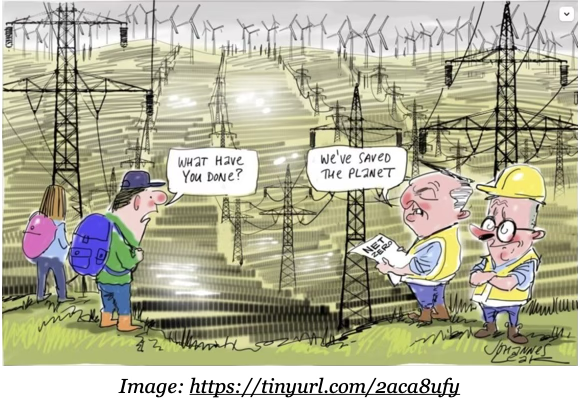
Consider the emissions involved in mining and refining the rare earth metals essential for renewable technologies. These processes wreak havoc on the environment, polluting air and water, destroying forests, and displacing communities. The destruction is not limited to far-off lands—biodiversity loss and ecosystem damage are occurring in our own backyards.
Many also fail to realise that the shift to green technologies doesn’t eliminate our reliance on oil-based products—it increases it. Solar panels, wind turbines, electric vehicles—all require plastics and composites derived from fossil fuels.
Meanwhile, the technologies being championed are often unproven, with life cycles that may produce more emissions than they ever save.
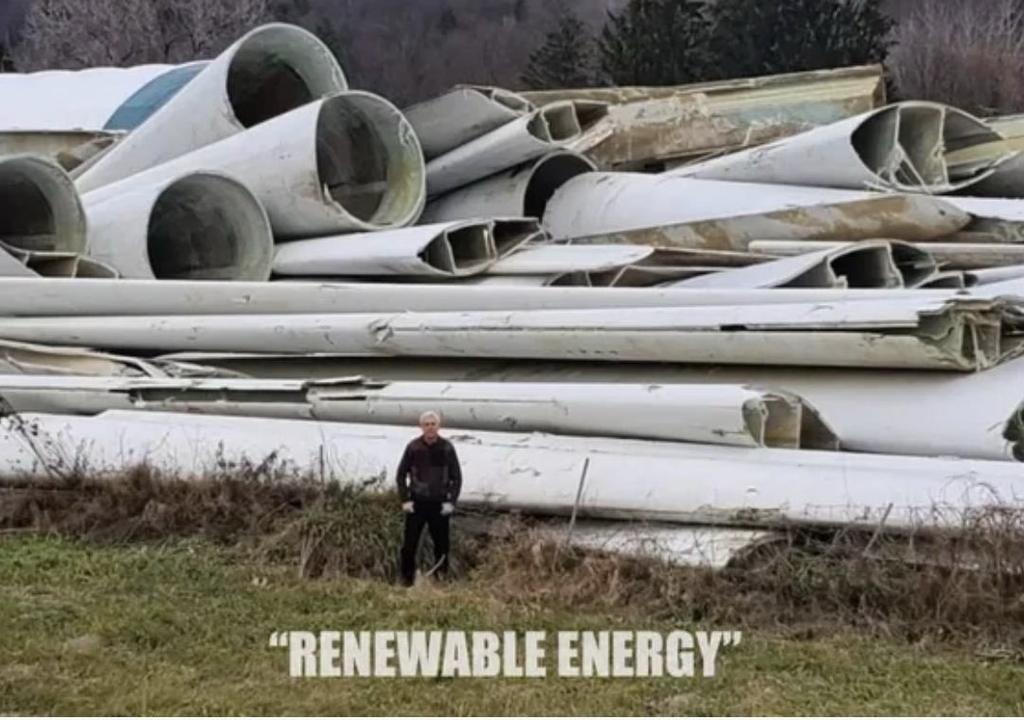
Then there is the issue of waste. The toxic by-products of these technologies—non-recyclable, long-lasting, and dangerous—are quietly piling up, destined to scar our landscapes for generations to come.
And yet, vast sums of taxpayer money continue to pour into these initiatives, often without proper scrutiny or accountability.
Few seem willing to question the narrative. The complexities are brushed aside in favour of a simplistic story of salvation—one that rarely aligns with the facts.
Saving the planet shouldn’t mean destroying it in the process. The UK government seem to think the road to Net Zero will be paved with good intentions, but many people believe it’s leading us straight into an environmental and financial disaster.
As we rush toward Net Zero, it’s time to ask hard questions. Because real environmental responsibility demands more than slogans. It demands honesty.
By Mairi Allan
Mairi Allan is a writer and publisher, and co-owner and editor of the Daily Dafty satirical Facebook page, and partner with the sports publishing agency Maranovo. For more information, see Daily Dafty on Facebook and visit Maranovo at maranovo.com.
Right of Reply: Contact DoD@DeclarationofDumfries.co.uk with additional or alternative information. Anonymity guaranteed.